
2 April 2026 · 5 min read
The Case for Dry-Ageing
Why we hang our ribeye for twenty-eight days, and what it does to the flavour.
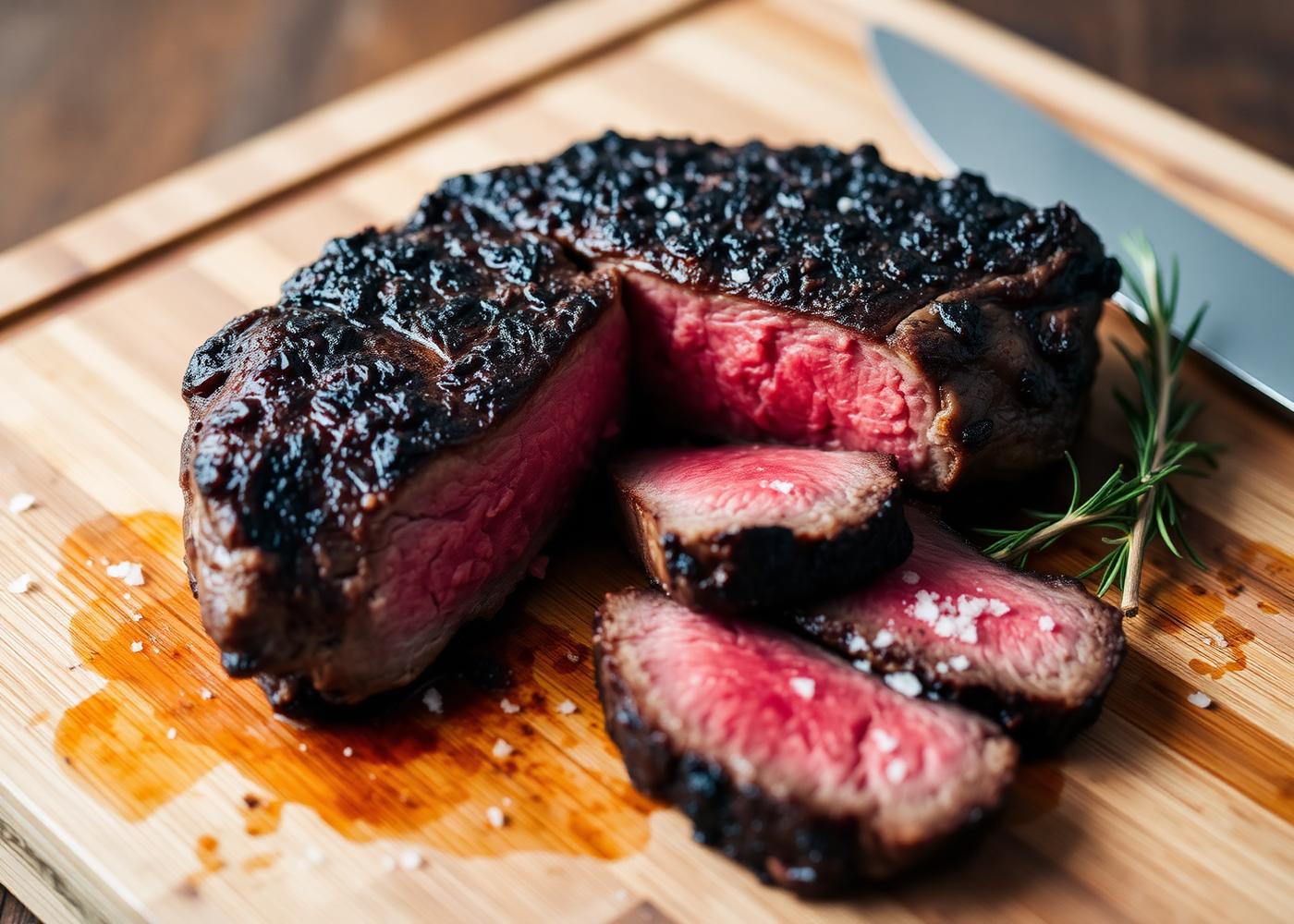
Dry-ageing isn't fashion. It's chemistry — slow, patient chemistry that takes a good piece of beef and makes it a great one.
In our chamber, a side of Kent-reared beef hangs at just above freezing in still, dry air for twenty-eight days. The surface darkens and forms a crust we trim away. The muscle relaxes. Enzymes break down protein into glutamates, and water evaporates, concentrating everything that's left.
What you taste is the difference. The texture is yielding rather than springy. The flavour edges towards roasted hazelnut and something almost like a good aged cheese. It is unmistakable.
We sell it because we believe in it, and because the farmers we buy from deserve the extra fortnight of care their work earns. Ask at the counter — we'll cut a steak to whatever thickness suits your pan.